
By the Kifayat Global Energy Limited News Desk
Brent crude was quoted at about $116.70 per barrel as at 5:20 AM WAT on Sunday, up 3.14%, while West Texas Intermediate (WTI) stood near $103.30, up 3.82%. Renewed threats to Saudi oil infrastructure and concerns about shipping through key Middle Eastern routes continue to keep global energy supplies under pressure.
The latest anxiety followed a claim by Yemen’s Houthi movement on 24 October that it had targeted Saudi Arabia’s oil infrastructure, including an Aramco facility in Yanbu, the Rabigh refinery and the East-West Pipeline, a strategic route for moving crude to the Red Sea. Reuters reported that Saudi-led coalition forces intercepted two ballistic missiles, but damage to the named facilities has not been confirmed. Any disruption could affect oil transportation, raise shipping insurance costs and deepen concerns about global supply.
Elsewhere in Asia, Indonesia has cut natural gas pipeline exports to Singapore by about 9%, redirecting 31 million standard cubic feet per day to meet domestic electricity demand, Reuters reported on 24 October. The move highlights the challenge of balancing energy security at home with export commitments. Singapore’s Energy Market Authority said the reduction represents less than 2% of its daily gas demand, and that contingency plans are in place to secure additional liquefied natural gas (LNG).
In Nigeria, EnergyXchange Africa’s depot intelligence shows petrol ranging from N1,337 to N1,341.50 per litre, while Automotive Gas Oil (AGO) sells between N1,795 and N1,920 per litre. Aviation turbine kerosene stands at N1,950 per litre, and liquefied petroleum gas (LPG) ranges from N1,050 to N1,300 per kilogramme. Actual purchase costs vary by depot, product availability and transportation expenses.
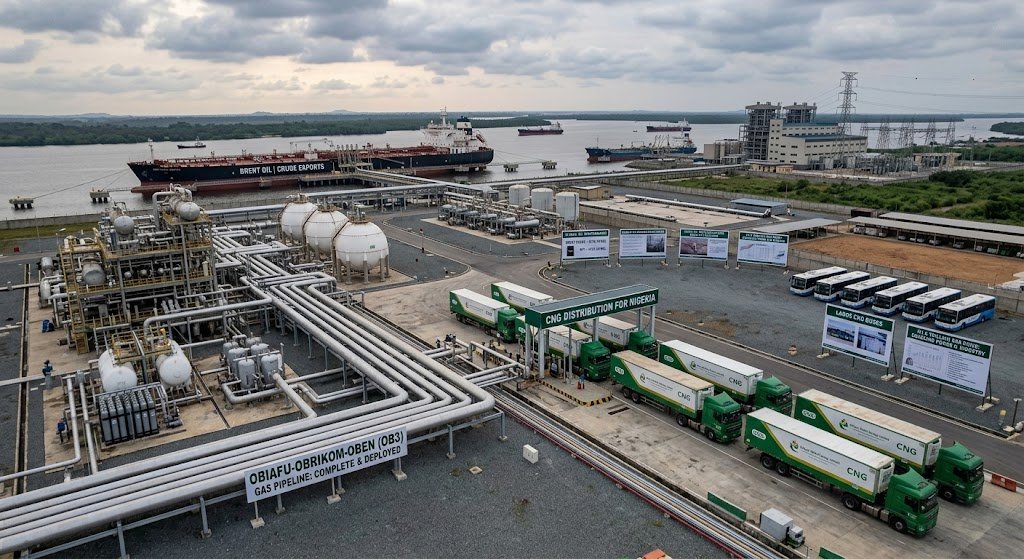
On the gas front, Nigeria’s N1.6 trillion investment drive faces a critical test as the Obiafu-Obrikom-Oben (OB3) pipeline nears completion. The drive includes N671 billion in approved Final Investment Decisions for gas infrastructure projects. The priority now is reliable gas delivery to power plants and industries, since without sufficient volumes and dependable distribution, the investment may not translate into better electricity generation, industrial productivity and economic growth.
Nigeria has also deployed 670 compressed natural gas (CNG) buses and is targeting five million households for cleaner cooking by 2030, according to figures disclosed in Kano and reported by TVC News on 24 October. Proven gas reserves reportedly rose from 208.83 trillion cubic feet in 2023 to 215.19 trillion cubic feet in January 2026. Wider adoption will depend on expanding refuelling infrastructure, improving gas distribution and keeping cleaner cooking fuels affordable and accessible.
Across Africa, Burundi has signed a $1.4 billion public-private partnership with Weza Power to expand electricity access to an estimated eight million people, according to the company’s 16 October announcement. The 25-year programme aims to lift access from about 15% to more than 50% by 2030. Its success will depend on financing, infrastructure delivery, connection costs and consumers’ ability to afford electricity.
Rwanda, meanwhile, is seeking developers for a proposed 200-megawatt floating solar project on Lake Sake, supported by 800 megawatt-hours of battery storage, Africa Energy Pulse reported on 23 October. Bidders must show average annual turnover of at least $300 million and access to at least $60 million in liquid funds or credit, with applications closing on 12 November 2026. Pairing solar with storage could improve reliability, though delivery will depend on financing, technical execution and grid integration.
Looking ahead, EnergyXchange Africa will monitor developments around Saudi oil infrastructure, crude export flows and shipping risks. In Nigeria, attention remains on Dangote diesel pricing, depot costs and the impact of fuel prices on transport and power generation, alongside progress on the OB3 pipeline and its potential to improve gas supply to industries and power plants.